Pool Cage Painting in Seminole, FL
We paint aluminum pool cages and screen enclosures for Seminole homeowners, restoring faded frames without the cost of a full replacement.
- Free Written Estimate
- Fast Scheduling
- Built for Florida Weather
- Licensed & Insured
- Free Written Estimates
Request Your Free Estimate
Tell us about your pool cage and get a free written estimate.
- Free No-Obligation Estimate
- Fast Response Times
- No Pressure Consultation
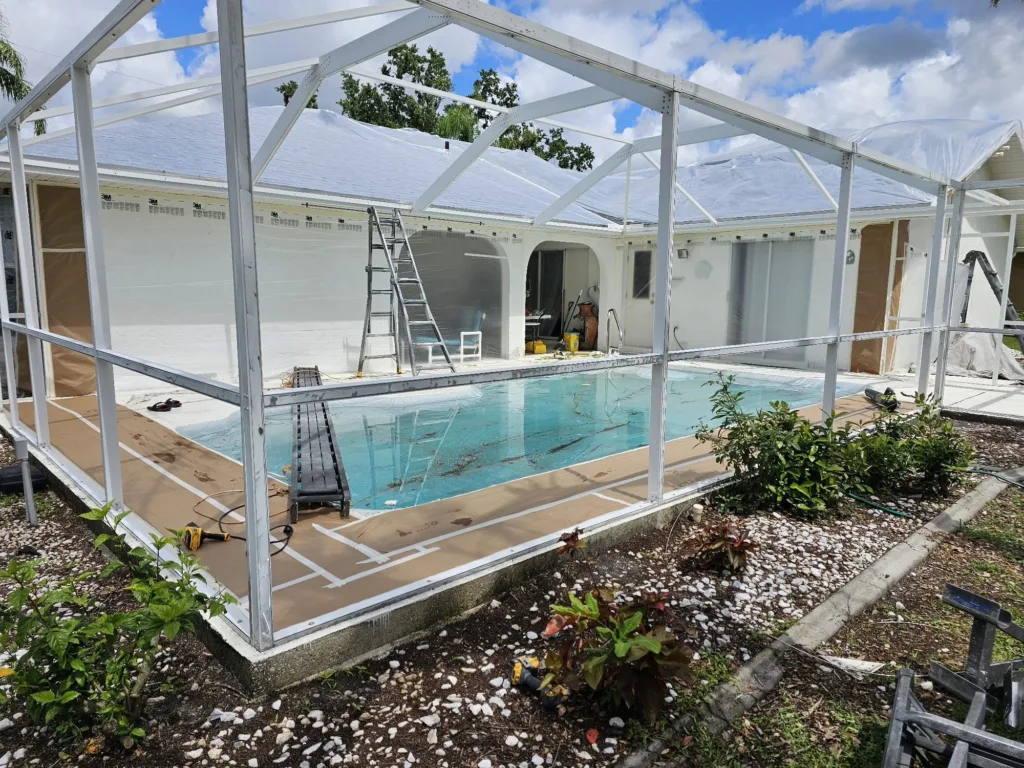
Seminole sits close enough to the Gulf that salt air, humidity, and intense UV exposure all work against painted aluminum year-round. Pool cages here often show chalking, rust streaks at fastener points, and faded finishes well before the structure itself has any real problem. These are cosmetic and protective issues, not reasons to replace the enclosure.
We have worked on cages across Seminole, from older enclosures near the Intracoastal to newer patio enclosures in neighborhoods off Park Boulevard and Seminole Boulevard. Our work focuses on proper surface prep, rust treatment, and coatings suited to aluminum, so the repaint holds up to the same sun and moisture that wore down the original finish.
Seminole’s Coastal Air and Pool Cage Wear
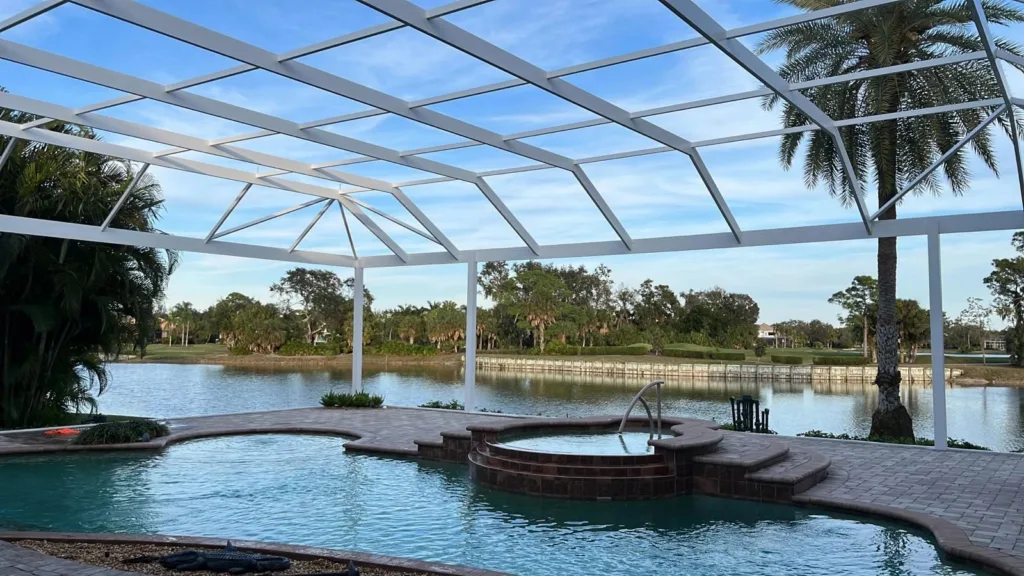
Homes near Indian Rocks Road and along the Intracoastal side of Seminole take the brunt of onshore breezes carrying fine salt particles. That salt settles on aluminum framing and screws, accelerating oxidation long before homeowners notice a problem. The same pattern shows up on patio enclosures in Largo and Clearwater, where coastal proximity shortens the life of factory finishes compared to inland Pinellas County neighborhoods.
Florida’s UV load is intense enough that most factory-applied coatings on pool cages begin chalking within several years, leaving a dusty white residue on hands and clothing after contact. Humidity compounds this by keeping moisture in contact with metal longer after rain, which is when rust first appears at screw heads and joint seams. None of this means the aluminum structure is failing, only that its surface protection needs renewal.
How We Prep and Paint a Screen Enclosure
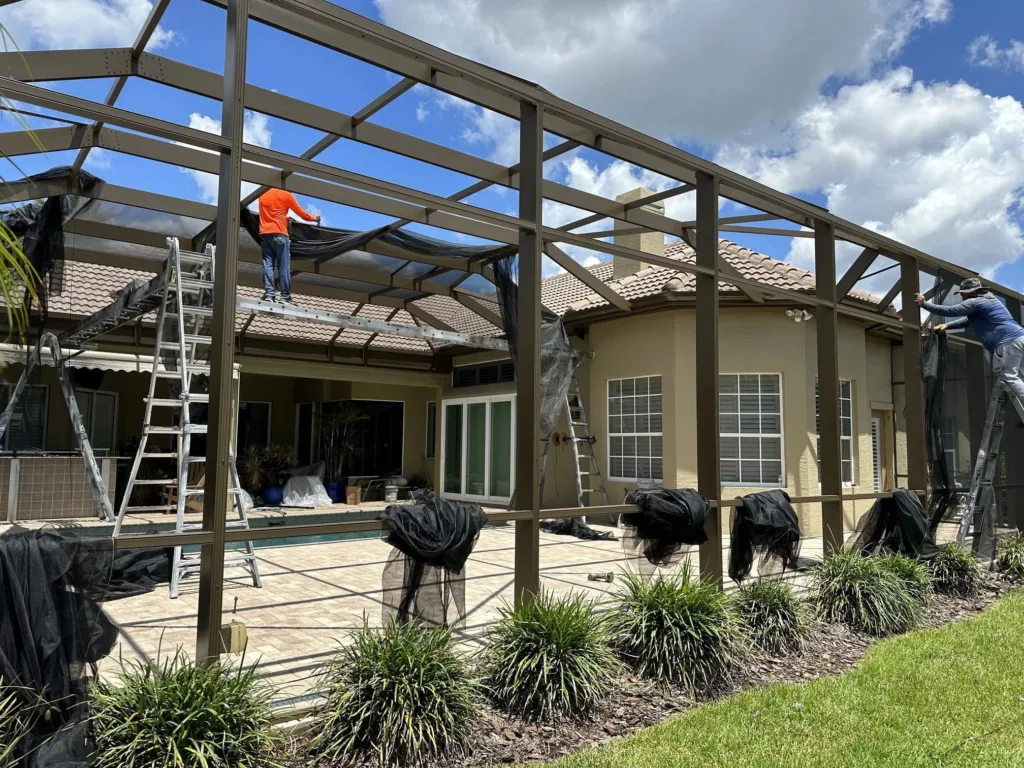
Every pool cage painting project starts with a thorough wash to remove salt film, mildew, and loose chalking paint. We then inspect fastener points and seams for rust, treating affected spots with a rust-converting primer before any topcoat goes on. Screens get masked carefully so overspray does not reach the mesh, which matters on porch enclosures in Seminole FL where screens are often replaced less frequently than the frame is painted.
Bare metal spots receive a primer formulated for aluminum, since skipping this step is the most common reason pool cage paint fails early. Topcoats are applied in conditions dry enough to cure properly, which in Florida often means scheduling around afternoon humidity and rain patterns rather than a fixed calendar date. We also note any HOA-specified color requirements common in Seminole communities before starting work.
- Pressure wash to remove salt, mildew, and loose paint
- Spot-treat rust at fasteners and joints with converting primer
- Mask screens to protect mesh from overspray
- Prime bare aluminum before topcoat application
- Apply coating during a weather window suited for proper curing
Timeline, Access, and HOA Approval
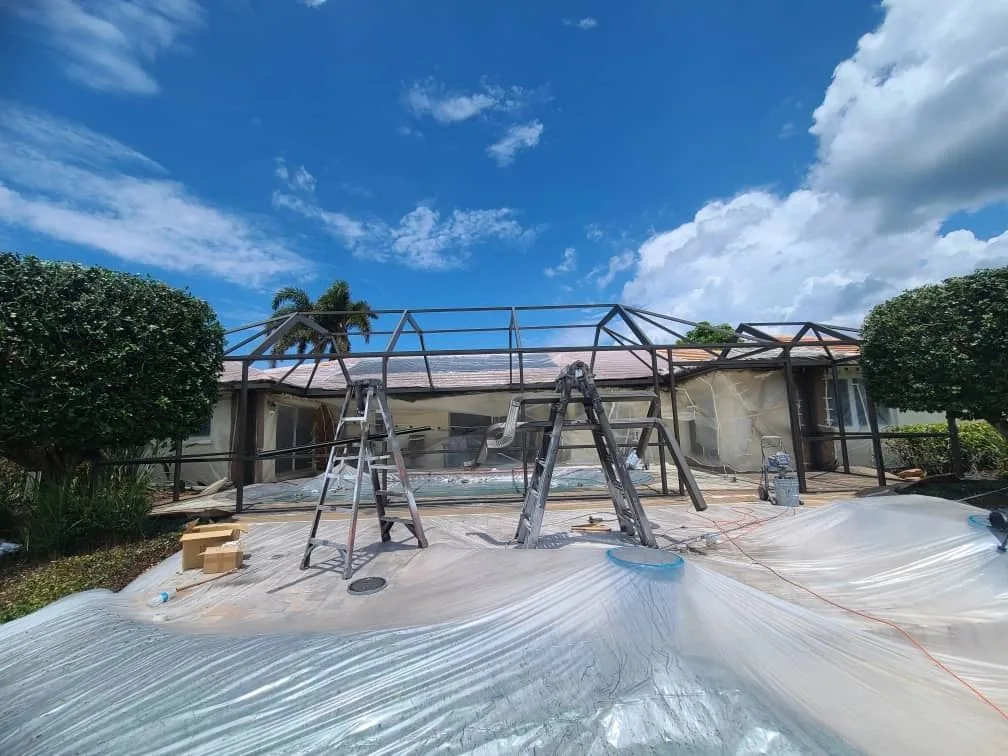
Most pool cage painting jobs in Seminole run two to four days depending on the size of the enclosure, the number of panels, and whether rescreening is needed alongside the paint work. Weather is the main variable; summer storms along Pinellas County can push a schedule back a day or two, and we plan around rain rather than rush coats that need to cure.
You can usually keep using the pool during the project, though we ask that the deck and cage area stay clear while we spray or roll each section. Pets and foot traffic are kept out of the work zone until panels are dry to the touch, which is typically a matter of hours, not days.
Many Seminole communities, including those with deed restrictions near Lake Seminole and the Park Boulevard corridor, require HOA approval of exterior paint colors before work begins. We can provide a color sample and product sheet for your submission, and we recommend starting that approval process early so it does not delay your start date.
Why Prep Quality Determines How Long Paint Lasts
The most common shortcut in pool cage painting is spraying new coating directly over chalked or oxidized aluminum. Chalking is the powdery residue that forms as old paint breaks down under UV exposure, and paint applied over it has nothing solid to grip, so it peels or flakes off within a season or two.
Rust spots at screws, hinges, and corner connectors are another frequent miss. If rust isn’t treated and primed before painting, it continues to spread underneath the new coat, eventually pushing through and staining the surface again. This is especially common on enclosures that have gone a decade or more without maintenance.
A pool cage painted without proper surface prep may look fine for the first few months, then start showing problems earlier than it should. Spending the extra time on washing, sanding glossy spots, and spot-priming rust is what separates a paint job that holds up from one that needs redoing in a short time.
Process and Timeline
- We inspect the cage structure and screens, noting rust spots, loose panels, and areas of chalking or peeling paint.
- We provide a free written estimate that outlines the prep work, coating system, and any rescreening needed.
- The enclosure is pressure washed to remove salt film, mildew, and loose or chalked paint.
- Rusted fasteners and corner joints are treated and spot-primed before any topcoat is applied.
- Coating is applied in the recommended number of coats, with drying time between each.
- We do a final walkthrough with you to check coverage, color, and overall finish.
Most Seminole pool cage painting projects take two to four days from start to finish, depending on size and weather.
Seminole Pool Cage Painting FAQ
How long does pool cage painting last in a coastal area like Seminole?
Coastal air near the Gulf is harder on aluminum finishes than inland areas, since salt and humidity accelerate oxidation and fading. A properly prepped and coated cage, using paint rated for aluminum and exterior exposure, typically holds its finish well for years before it needs attention again, though exact longevity depends on sun exposure and how close the property sits to open water.
Can you paint over rust spots on my pool cage frame, or do they need to be repaired first?
Rust and corroded fasteners need to be treated before painting, not covered over. We sand or wire-brush affected areas down to bare metal, treat them with a rust-inhibiting primer, and replace badly corroded screws or connectors so the new paint has a stable surface to bond to.
Will the screens be removed or damaged during the painting process?
Screens stay in place during painting. We mask them off carefully so overspray does not land on the mesh, and the crew works section by section to keep the screen material clean and intact.
Does my HOA need to approve the paint color before you start?
Many Seminole communities have architectural guidelines that cover exterior colors, including pool cages, so it is worth checking with your HOA before committing to a shade. We can provide a color sample or spec sheet if your association needs one for approval.
How many days will my pool be inaccessible during the project?
Most pool cage painting projects take a few days from prep through final coat, depending on the size of the enclosure and weather conditions. The pool itself usually remains usable once paint has dried to the touch, though we will give you a clearer timeline after seeing the cage.
Is painting a better option than rescreening, or should I do both at once?
It depends on the condition of your screens. If the mesh is still intact and free of tears or heavy wear, painting alone can refresh the look of the cage; if the screens are brittle, torn, or sagging, it often makes sense to rescreen at the same time so you are not paying for labor twice.
More Pool Cage Services in Seminole
Beyond painting, we also handle pool cage rescreening in Seminole for homeowners dealing with torn or aging screens. Pool Cage Rescreening.
Nearby Areas We Also Serve
Crews based near Seminole also take on pool cage projects throughout the surrounding Pinellas County communities. Tarpon Springs, Oldsmar, Dunedin, Pinellas Park, Lithia and Brooksville.
Statewide details, colors and the full process are on our main pool cage painting page.
Request a Seminole Estimate
Send a few photos of your pool cage along with the property address in Seminole, and we will reply with a written estimate based on the size and condition of the enclosure. You can also reach us directly at (877) 851-8727 if you would rather discuss the project by phone first.
Last reviewed: October 28, 2026