Pool Cage Rescreening in Mulberry, FL
We rescreen pool cages and lanais for Mulberry homeowners, replacing torn or sagging screen panels so the enclosure keeps out insects and debris again.
- Free Written Estimate
- Fast Scheduling
- Built for Florida Weather
- Licensed & Insured
- Free Written Estimates
Request Your Free Estimate
Request a free written estimate for your Mulberry pool cage.
- Free No-Obligation Estimate
- Fast Response Times
- No Pressure Consultation
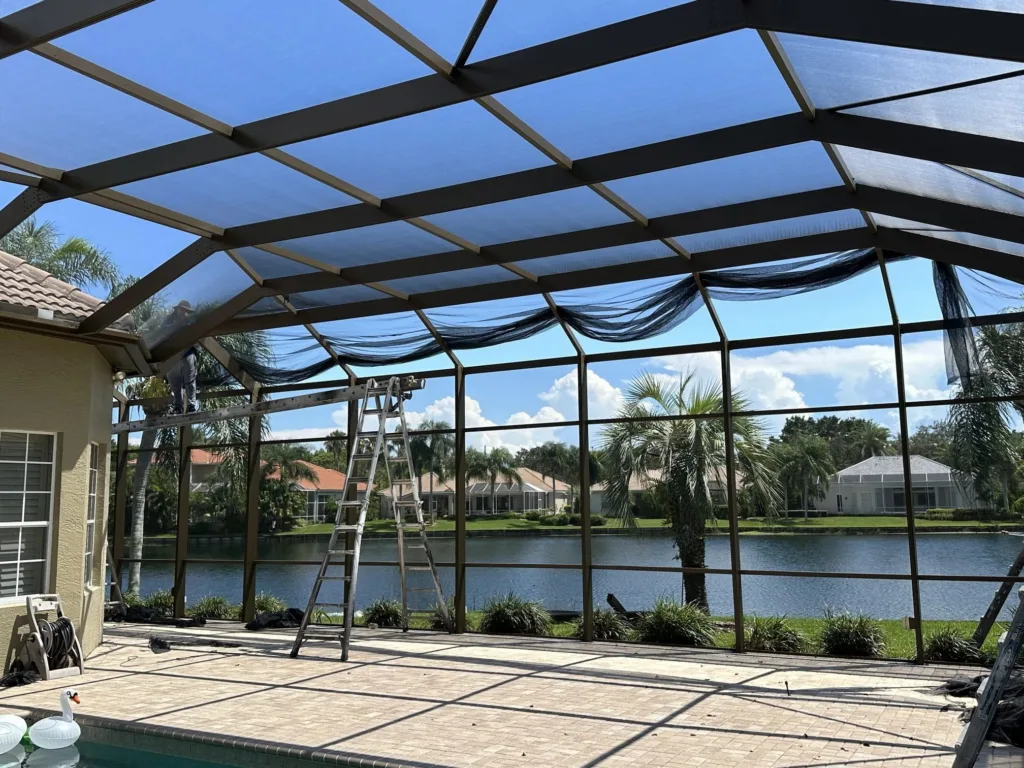
Mulberry sits in Polk County, a small Central Florida community of about 4,000 residents surrounded by older phosphate-mining land and newer residential growth. Many homes here, from the established streets near downtown to newer construction off Highway 60 and County Road 37, have pool cages exposed to long stretches of direct sun, afternoon thunderstorms, and humid air that moves in from both the Gulf and Atlantic sides of the state.
That combination breaks down screen mesh faster than homeowners expect. Fiberglass and aluminum screening stretched over a pool cage typically shows UV damage, brittleness, and small tears years before the cage frame itself needs attention. Tampa Pool Cage Painting sends crews into Mulberry to inspect panels one by one, replace what has failed, and re-tension the spline so the enclosure holds up through another Florida storm season.
Sun and Storm Exposure in Mulberry
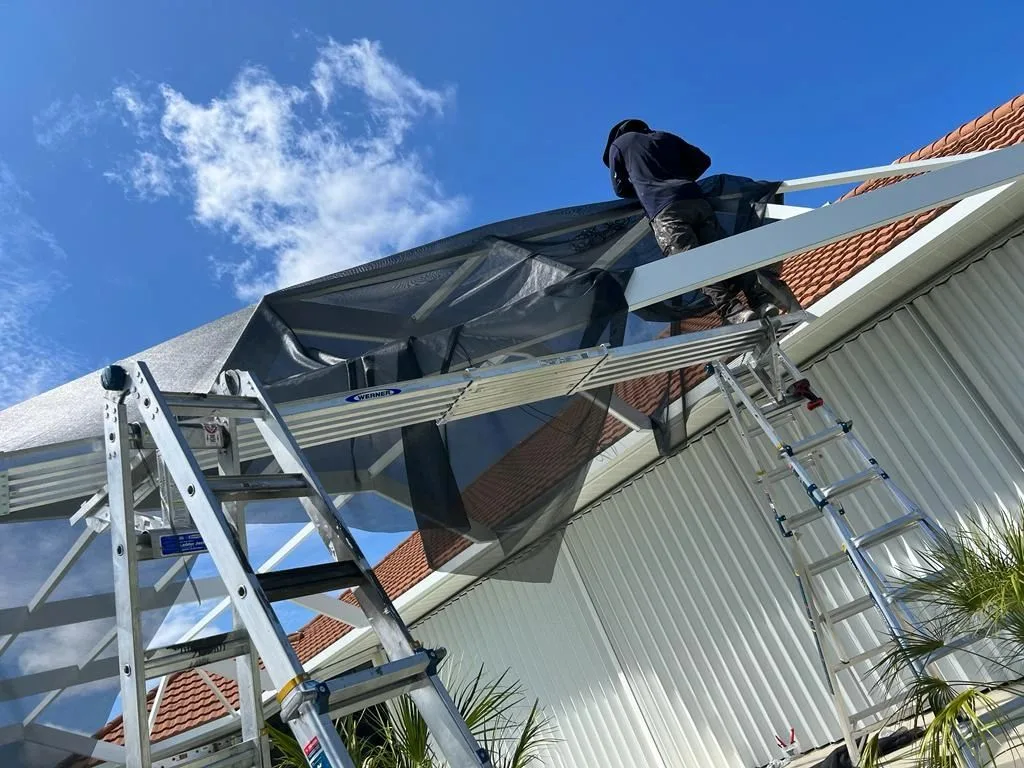
Mulberry’s pool cages face a long cooling-off period between winter and the start of summer storm season, but the sun exposure in between does the real damage. South- and west-facing panels take the brunt of UV rays through the afternoon, and that steady heat breaks down the polymer in fiberglass and vinyl-coated mesh years before a shaded north panel shows the same wear.
Afternoon thunderstorms that build up over Polk County through summer bring wind-driven rain and occasional hail-sized debris, which stresses screen panels already softened by sun exposure. Homes on open lots off Highway 60 or County Road 37, without mature tree cover, tend to see mesh sag and pull from the spline sooner than homes tucked into older, tree-lined streets near downtown Mulberry.
Because wear patterns depend on which way a lanai faces and how much shade surrounds it, a cage rarely needs full rescreening all at once. We check each panel’s mesh condition against its sun exposure and recommend rescreening only where the aluminum frame and spline channel can still hold a fresh screen properly.
- South and west panels typically wear faster from direct UV exposure
- Open lots near Highway 60 and County Road 37 see more wind-driven storm stress
- Shaded panels near mature trees often last longer between rescreens
How We Rescreen a Pool Cage
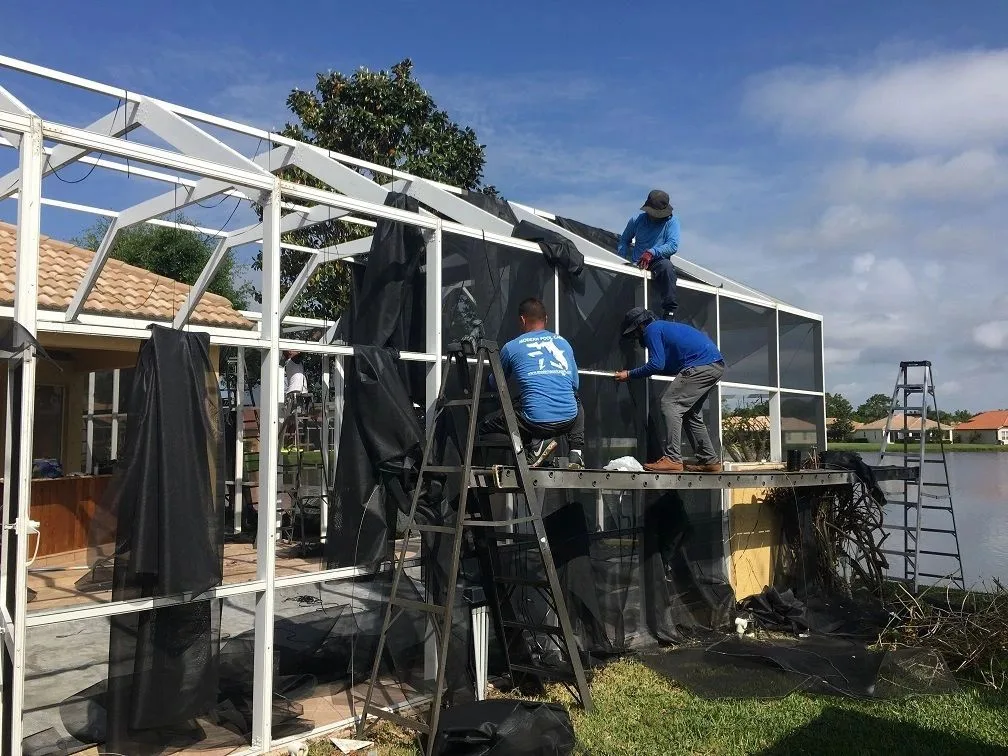
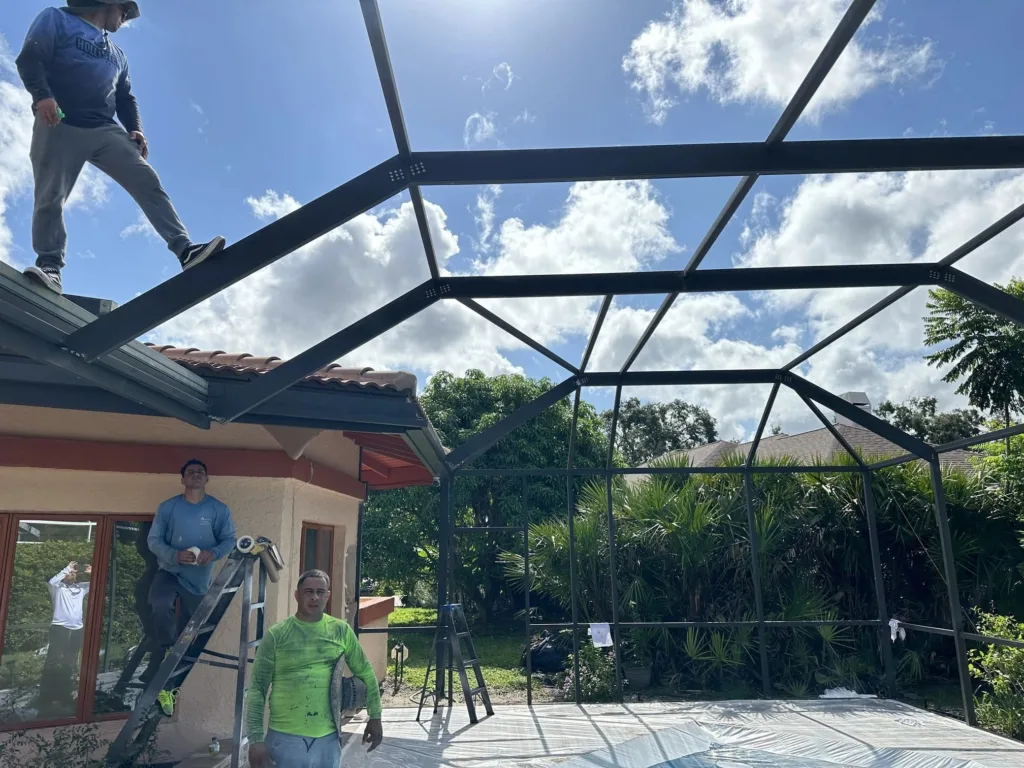
Rescreening starts with removing the old mesh and spline from each panel, one section at a time, so the aluminum frame stays intact. We inspect the spline channel for corrosion or warping as the old material comes out, since a damaged channel won’t hold new screen securely regardless of how well the mesh itself is installed.
Once a channel is clean, we cut new mesh to size, allowing enough overlap to seat properly in the frame. Fiberglass and vinyl-coated polyester are the common choices, with heavier no-see-um mesh available for homes near wooded areas or lower-lying lots where small insects are more persistent.
The new screen is rolled into the channel with fresh spline, pulled taut to avoid sagging or rippling over time. We work panel by panel rather than cage-wide, which keeps the rest of the enclosure usable during the project and lets us match screen type to each panel’s sun and wear conditions.
- Remove old mesh and spline, inspect the frame channel for damage
- Cut new mesh to size with proper overlap for a secure fit
- Roll fresh spline to seat screen tightly and evenly
- Work panel by panel to keep the enclosure functional during the job
Scheduling, Access, and HOA Notes
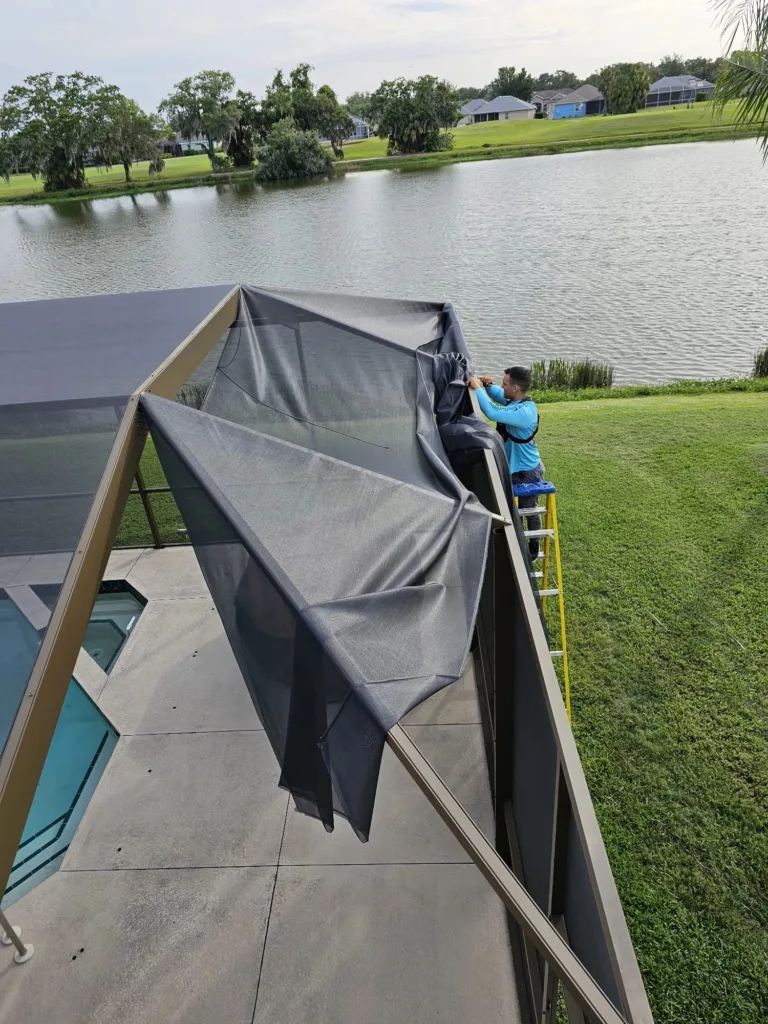
Most rescreening jobs in Mulberry take one to three days depending on the size of the cage and whether any frame repair is needed alongside the new mesh. We work around pool use where possible, but the pool area needs to be clear of furniture, grills, and potted plants before the crew arrives so panels can be removed and reset without obstruction.
Many Mulberry properties, including homes near Lakeland Highlands and newer sections off State Road 60, fall under HOA or deed-restricted community rules that govern screen color and mesh type. We can supply spec sheets for the estimator to submit for approval, but homeowners should confirm their community’s timeline for sign-off before locking in a work date, since approval can add a week or more.
Summer afternoon storms are the most common cause of rescheduling. Rescreening itself can proceed around light rain, but we hold off during lightning or sustained wind, which is routine for Polk County’s June through September pattern and gets built into the estimate as a loose window rather than a fixed date.
Mistakes That Shorten Screen Life
The most common repeat-repair call we see starts with mismatched mesh weight, usually a lighter fiberglass screen installed on a pool cage that needs 18×14 pet-resistant or heavier mesh for high-exposure panels. Lighter mesh costs less upfront but tears sooner under wind load and daily sun, which means another rescreening job within a few years instead of a longer-lasting result.
Skipping the frame inspection is the second issue. If a spline channel is bent, corroded, or no longer holds tension evenly, new screen stretched over it will sag or pull loose at the corners within months. We check each panel’s frame condition before cutting mesh, and we flag any sections that need straightening or hardware replacement rather than screening over a frame that will not hold.
Process and Timeline
- An estimator visits the property, measures each panel, and notes frame condition and any HOA requirements.
- We confirm mesh type and color, factoring in pet resistance, pool-side sun exposure, and community guidelines where they apply.
- Old mesh and spline are removed panel by panel, and frames are cleaned and checked for damage before rescreening.
- New mesh is cut, stretched, and secured with fresh spline, working methodically from one end of the cage to the other.
- Door latches, closers, and any loose fasteners are checked and adjusted as panels are completed.
- A final walk-through confirms tension and fit on every panel before the crew leaves the site.
Most Mulberry rescreening projects run one to three days from start to finish, longer if HOA approval or frame repairs are needed first.
Mulberry Pool Cage Rescreening FAQ
How do I know if my pool cage needs full rescreening or just a patch repair?
If the damage is a handful of small tears or a loose spline in one or two panels, a patch repair is usually enough. When screens are brittle, pulling away from the spline track in multiple panels, or discolored from years of sun exposure, full rescreening is the more lasting fix. A technician can tell the difference during a walk-around and give you a written recommendation rather than guessing from a photo alone.
What screen mesh options are available, and which holds up best in Polk County weather?
Standard fiberglass insect screen is the common choice, along with heavier pet-resistant mesh and solar or privacy screen for panels that get direct afternoon sun. In Polk County, where summer storms and UV exposure are routine, a mid-weight fiberglass mesh tends to balance airflow, visibility, and durability better than lightweight screen.
How long does it take to rescreen an average pool cage in Mulberry?
A typical residential cage, including homes in established Mulberry neighborhoods with mid-size lanais, takes about one to three days depending on the number of panels and frame condition. Larger enclosures or jobs that uncover frame repairs needed along the way can run longer, which is noted upfront in the estimate.
Will you need access inside my house or just the pool enclosure area?
Rescreening work is done entirely from the pool enclosure and yard side, so interior house access is not needed. The crew will need clear access to the lanai area and enough space around the cage to maneuver screen rolling tools and ladders.
Do I need HOA approval before rescreening my lanai in my Mulberry neighborhood?
Many Mulberry subdivisions and deed-restricted communities require a form or color approval before exterior work on a screen enclosure, so it is worth checking your HOA's architectural review rules before scheduling. If approval is needed, the estimate and mesh or frame color details can be provided in a format suitable for submission to the board.
Can rescreening be done if some of the cage frame is bent or corroded?
Yes, minor bent members or spot corrosion can often be repaired or replaced as part of the same visit, since the screen has to come off those panels anyway. Frames with widespread corrosion or structural bowing are flagged separately, since that work affects safety and should be addressed before or alongside rescreening.
Nearby Areas We Also Serve
Crews working in Mulberry also cover surrounding Polk County communities and the greater Lakeland area. Lakeland, Winter Haven, Haines City, Bartow, Auburndale and Davenport.
Statewide details, colors and the full process are on our main pool cage rescreening page.
Recent Work
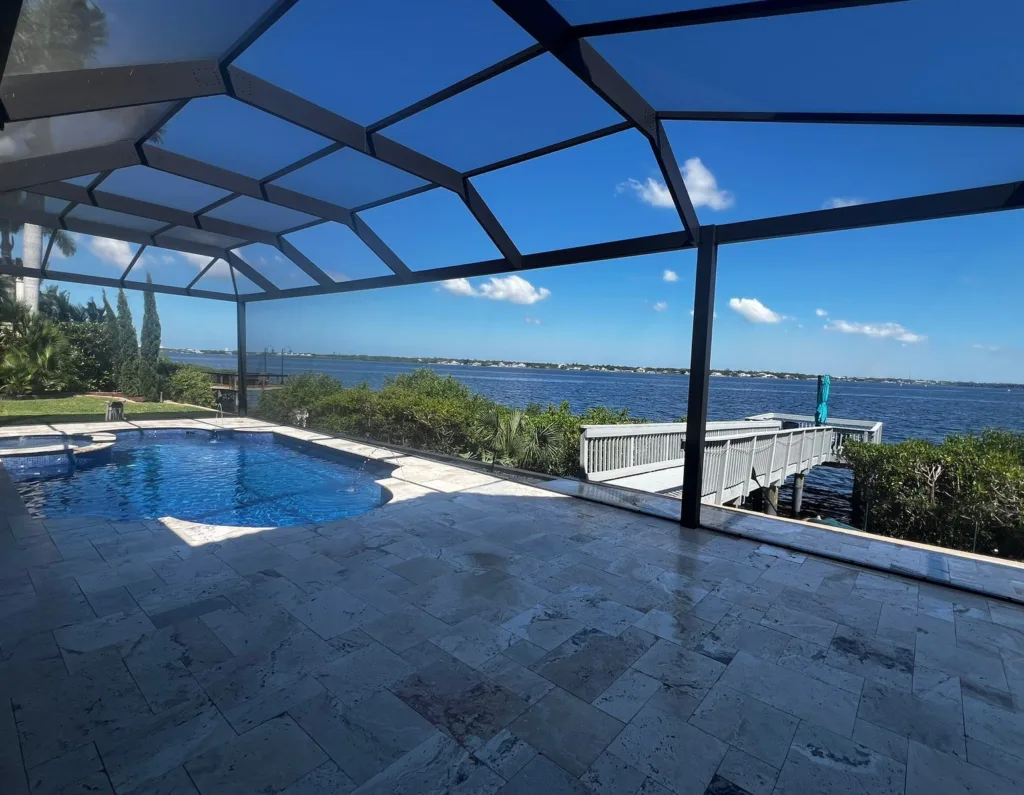
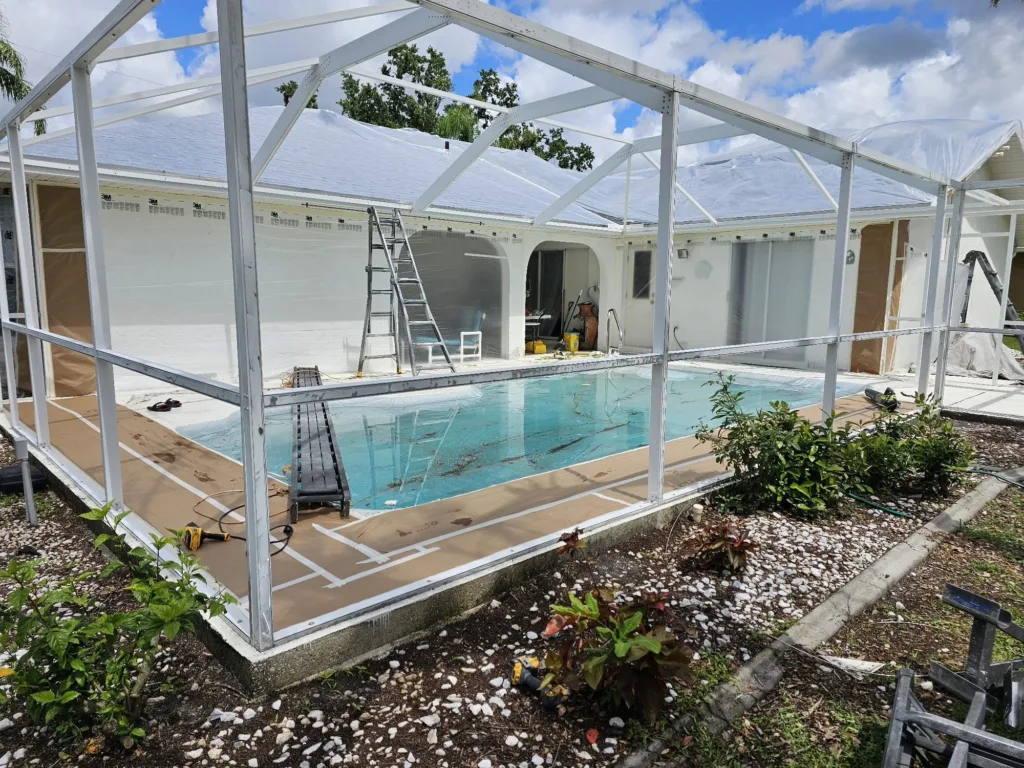
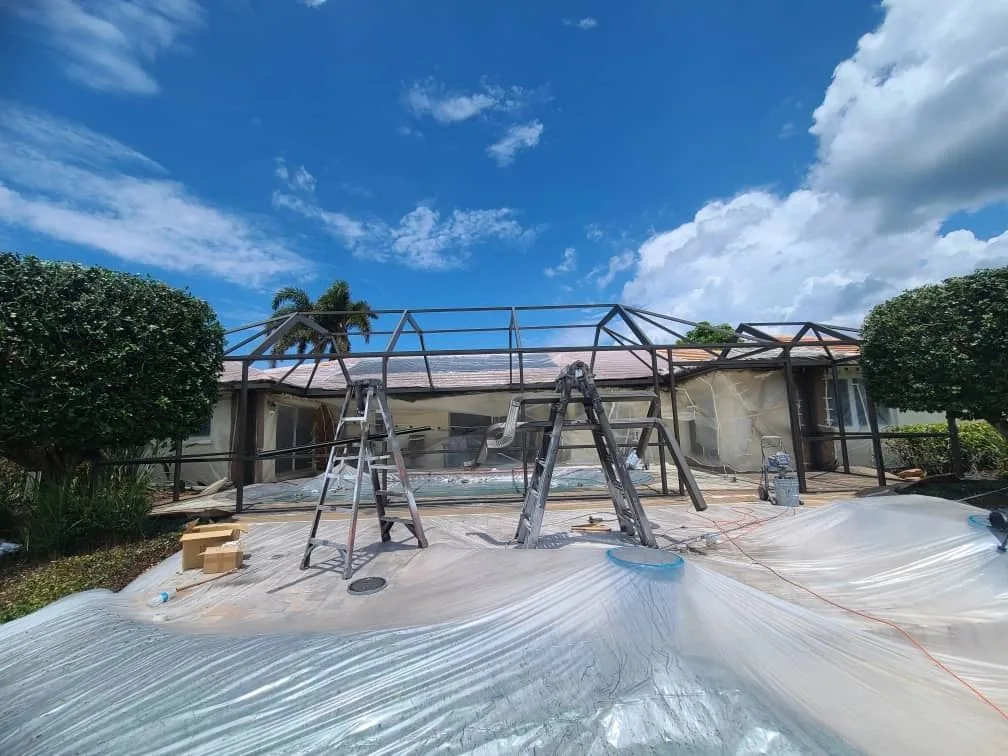
Request a Mulberry Estimate
Send a few photos of the cage, including any damaged panels or bent frame sections, along with the property address in Mulberry. A written estimate is prepared from those details, with final pricing confirmed after an on-site look if needed.
Last reviewed: October 31, 2026