Pool Cage Restoration in St. Petersburg, FL
We restore worn pool cages across St. Petersburg, addressing rust, chalking paint, loose panels and torn screen caused by sun and salt air.
- Free Written Estimate
- Fast Scheduling
- Built for Florida Weather
- Licensed & Insured
- Free Written Estimates
Request Your Free Estimate
Tell us about your enclosure and we will schedule a free on-site estimate.
- Free No-Obligation Estimate
- Fast Response Times
- No Pressure Consultation
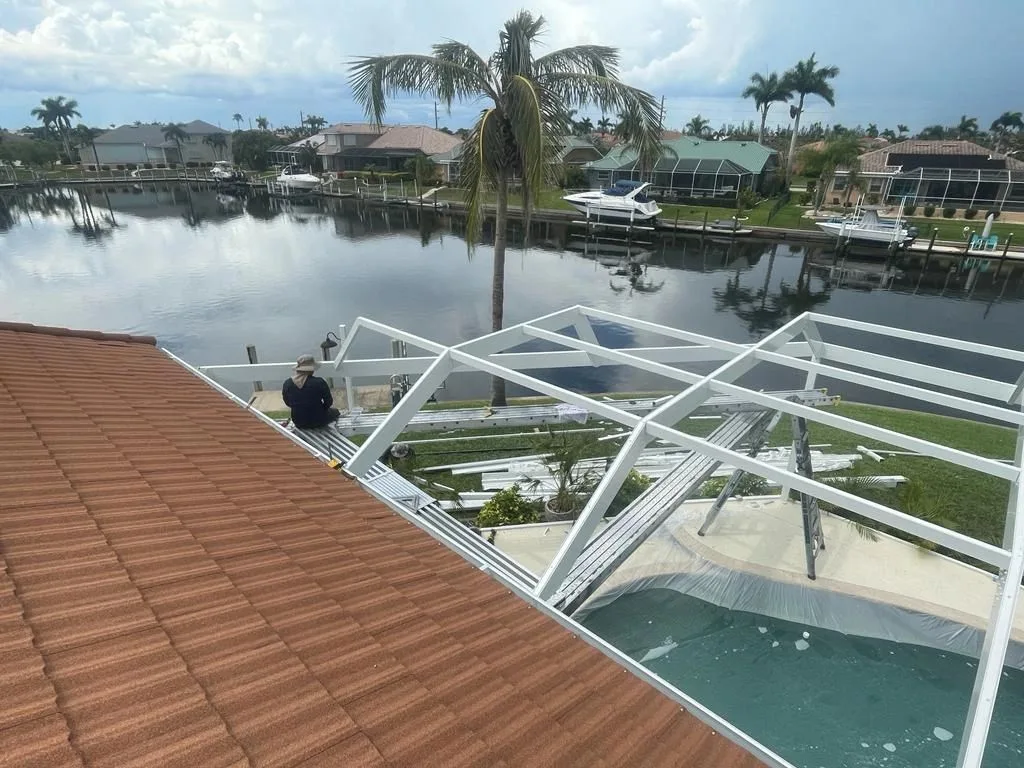
St. Petersburg sits on a peninsula between Tampa Bay and the Gulf, and that location shapes how a pool cage ages. Homes near Shore Acres, Snell Isle and the waterfront downtown corridor take on salt-laden air that attacks aluminum fasteners and screws faster than inland neighborhoods. Add in intense UV exposure most of the year, and factory paint on a screen enclosure typically chalks, fades or peels well before the frame itself fails structurally.
We have worked on cages across St. Petersburg, from older enclosures in Pinellas County neighborhoods built decades ago to newer construction near Gateway and Carillon. Restoration work here means assessing the aluminum frame, replacing screen panels torn by storms or pets, treating corrosion at fastener points, and applying a coating system suited to Florida’s heat and humidity rather than a generic exterior paint.
Salt Air and Sun in St. Petersburg Neighborhoods
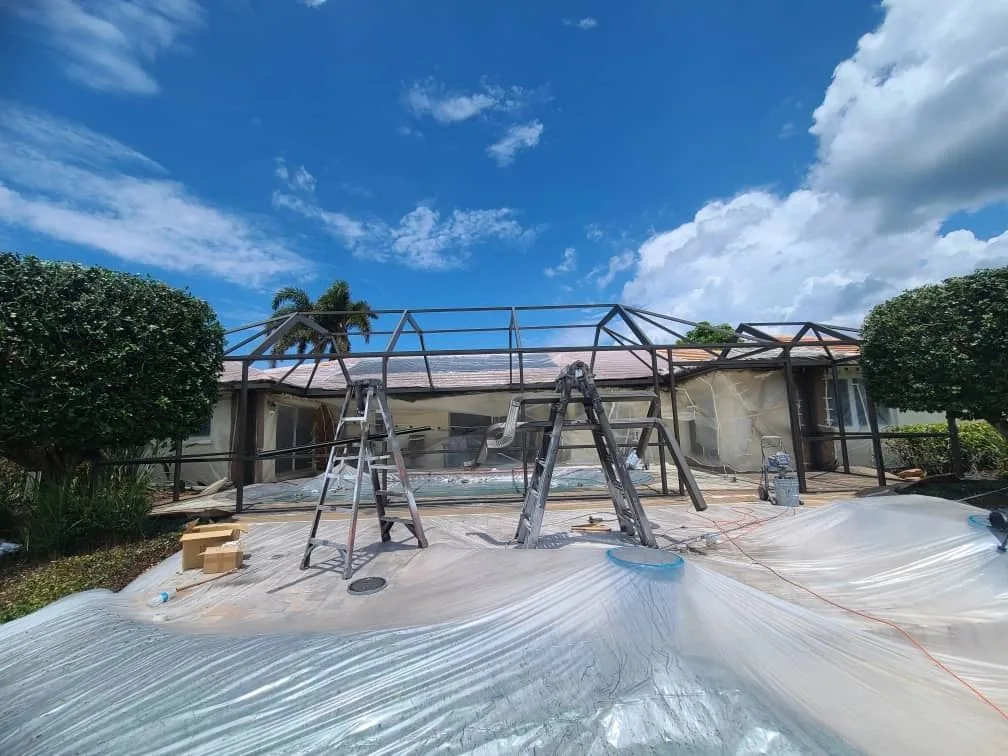
Farther inland, neighborhoods like Kenwood, Historic Old Northeast and areas near Crescent Lake see slower corrosion, but even there, Pinellas County’s humidity and summer storm cycles take a toll on screws, rivets and screen spline over time. Chalky residue on the frame, rust streaks at the base plates and brittle screen mesh are the usual signs a cage needs attention rather than another season of waiting.
Cages close to the water, including those on Tierra Verde, along Pass-a-Grille, and in the Bayway corridor, face the most aggressive conditions. Afternoon thunderstorms common to the Tampa Bay area also drive wind-blown debris into screens, which combined with salt exposure shortens the usable life of both the mesh and the frame’s factory finish well before the aluminum itself is structurally compromised.
How We Restore a Pool Enclosure
Every pool enclosure restoration in St. Petersburg, FL starts with a hands-on inspection of the frame, fasteners and screen condition, checking for loose panels, corroded hardware, and stress points where the cage meets the pool deck or roofline. We note which sections need rescreening, which fasteners should be replaced with corrosion-resistant hardware, and whether any structural members need reinforcement before coating.
Frame repair comes next: tightening or replacing screws, addressing rust spots, and smoothing surface corrosion so the new coating adheres properly. We then rescreen damaged or aged panels, matching mesh type to the homeowner’s preference for visibility, airflow or added privacy, before applying a coating system suited to aluminum and Florida’s UV and humidity exposure.
Depending on the size of the enclosure and the number of panels being rescreened, a typical project runs a few days to about two weeks. We account for Florida’s rain patterns when scheduling coating work, and for homes in HOA or deed-restricted communities, we can work within association guidelines on finish color and screen type before starting.
- Inspection of frame, fasteners and screen condition
- Repair or replacement of corroded hardware and stress points
- Rescreening with mesh suited to the home’s needs
- Surface prep and coating application for aluminum
- Final walkthrough before project close-out
Timeline, Access and HOA Approval
Most pool cage restorations take a few days to about two weeks, depending on the size of the enclosure, how much corrosion repair is needed, and whether rescreening is included. Florida weather is the main variable: summer thunderstorms are frequent and can push painting back a day at a time, since coatings need dry surfaces and several rain-free hours to cure properly.
We ask that the pool and yard remain accessible during the project, and we work around pets, pool service visits and irrigation schedules when we can. Furniture, grills and planters near the cage usually need to be moved temporarily so panels and framing can be reached and sprayed evenly.
Many St. Petersburg neighborhoods have community associations with approved paint color lists for screen enclosures, particularly in deed-restricted developments near Pinellas County waterways. We can work from your HOA’s documented color options, and we recommend confirming approval before we schedule the job to avoid delays once work begins.
Mistakes That Shorten a Restored Cage’s Life
The most common failure we see is paint applied directly over corroded aluminum. Oxidation under a fresh coat keeps spreading, and the paint bubbles or peels within a year or two, especially on cages near Tampa Bay where salt air accelerates the process. Corrosion has to be mechanically removed and the metal treated before any coating goes on.
A second issue is ignoring screen tension and fastener condition during a repaint. Screens that are already loose or torn will sag further under new vibration from pressure washing or handling, and panels with stripped or rusted fasteners can work loose months later even if the paint job itself looks clean.
Skipping proper surface prep, like a thorough pressure wash and etching primer suited to aluminum, is another shortcut that shows up early. In St. Petersburg’s combination of intense UV exposure and humidity, a coating that isn’t bonded correctly will chalk, fade unevenly, or lift at the seams well before it should.
Process and Timeline
- We inspect the frame, fasteners and screens on site and provide a free written estimate.
- Loose or corroded fasteners are repaired or replaced and corrosion is treated before any coating is applied.
- The entire enclosure is pressure washed and allowed to dry fully.
- Primer and finish coats are applied in sections, timed around weather conditions.
- Screens are rescreened or re-tensioned as needed once painting is complete.
- We do a final walkthrough with you to check coverage, color match and screen fit.
Most St. Petersburg pool cage restorations are completed in a few days to about two weeks, depending on size and weather.
St. Petersburg Pool Cage Restoration FAQ
How do I know if my pool cage needs restoration instead of full replacement?
If the aluminum frame is still straight and the fasteners and panel corners are sound, restoration is usually the right call, since the structure is doing its job and only the finish and screens have given out to sun and salt air. Replacement becomes necessary when there is corrosion through the frame, bent or bowed panels, or structural pulling away from the footer, which we check for during the free estimate visit.
Will salt air from living near the water make the restoration wear out faster?
Homes closer to Tampa Bay and the Gulf do see faster oxidation and screen degradation, which is why we use coatings formulated for coastal aluminum and recommend a rinse-down schedule for homes near the water. It does not make restoration a poor choice, it just means the right prep and products matter more than they would further inland.
Does my St. Petersburg HOA or community have rules about pool cage paint colors?
Many communities in St. Petersburg, from older Old Northeast bungalow neighborhoods to newer developments near Skyway Marina District, have approved color lists or require ARC sign-off before repainting a cage. We can work from your HOA's documented color codes or provide a sample panel for board approval before we schedule the job.
How long does a typical pool cage restoration take from start to finish?
Most St. Petersburg projects run three to seven days depending on cage size, how much rescreening is needed, and whether rust spot-repair or panel straightening is required. Florida's summer rain pattern can push painting days by a day or two if we need dry curing windows between coats.
Can you match the existing screen enclosure color or frame style?
Yes, we can match standard frame colors like bronze, white, and off-white, and we carry both fiberglass and aluminum screen mesh in standard and no-see-um weights to match what is currently installed. If the existing color has faded unevenly, we will show you samples next to the current frame so the match is accurate rather than guessed at.
Do I need to drain or cover my pool during the repainting and rescreening work?
No draining is necessary, but we do cover the pool surface and any water feature with protective sheeting before sanding, pressure washing, or spraying begins. This keeps overspray and old screen debris out of the water so the pool stays usable once the work area is cleared each day.
Statewide details, colors and the full process are on our main pool cage restoration page.
Request a St. Petersburg Estimate
Send a few photos of your pool cage along with the property address in St. Petersburg, and we will reply with a written estimate outlining the scope and timeline. For questions before then, call (877) 851-8727.
Last reviewed: October 28, 2026