Pool Cage Restoration in Lakeland, FL
We restore aluminum pool cages across Lakeland, addressing rust, loose panels, faded frames and torn screens caused by years of Central Florida sun and storms.
- Free Written Estimate
- Fast Scheduling
- Built for Florida Weather
- Licensed & Insured
- Free Written Estimates
Request Your Free Estimate
Tell us about your pool cage and we will get back to you with next steps.
- Free No-Obligation Estimate
- Fast Response Times
- No Pressure Consultation
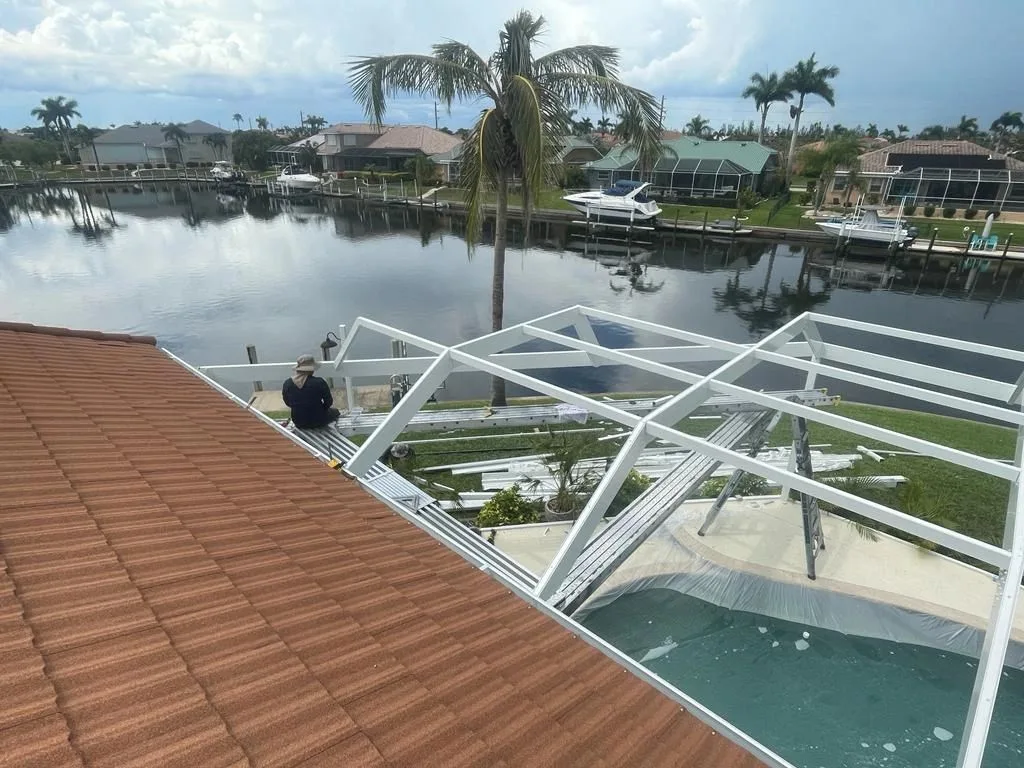
Lakeland’s pool cages spend most of the year under intense sun, afternoon thunderstorms and the humidity that comes with Central Florida living. Aluminum frames chalk and fade, fasteners corrode, and screen panels stretch or tear, especially on enclosures installed before stricter Florida Building Code wind standards took effect. These issues show up gradually, often noticed first as rust streaks on stucco or a panel that flexes in a breeze.
Restoration means more than a patch job: it is an assessment of the frame’s structural fasteners, panel alignment, screen condition and paint system, followed by repairs that address the cause rather than just the appearance. We have worked on cages across Lakeland, from older homes near Lake Hollingsworth to newer construction in the Highlands area, and we scope each project around the specific condition of the aluminum and screen, not a generic package.
Lakeland Weather and Neighborhood Wear Patterns
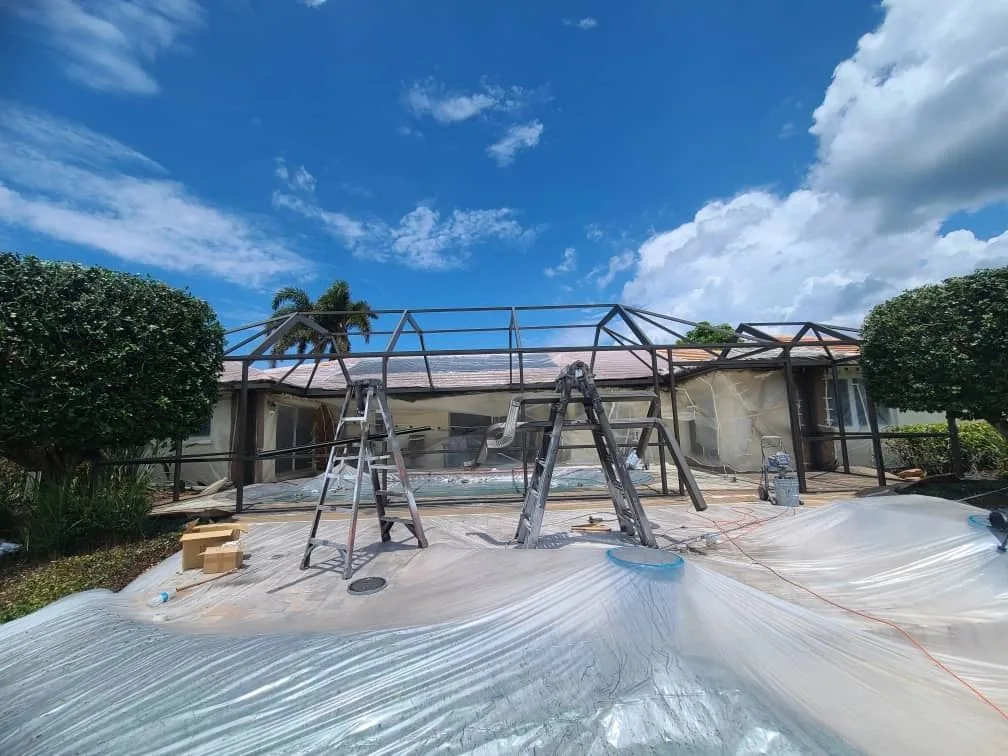
Homes in Lakeland Highlands and Medulla tend to sit on larger lots with mature oak canopy, which shades cages part of the day but also drops leaf litter and sap that trap moisture against screen mesh and frame joints. That trapped moisture speeds up corrosion at fastener points, even when the aluminum itself still looks sound from a distance.
Fuller Heights and other areas closer to open water or low-lying terrain see more direct sun and wind off the lakes, which accelerates chalking on painted or mill-finish aluminum and puts extra stress on screen panels during afternoon storms. Cages near larger bodies of water also pick up more airborne moisture, which contributes to the white oxidation residue common on older unpainted frames.
Across Polk County, the pattern is similar even where the details differ: south and west-facing cage panels fade and chalk first, lanai corners and ground fasteners rust first, and screens stretched tightest along the roofline tear first. Restoration work has to account for which exposure a cage has had, not just its age.
How We Restore a Pool Cage, Step by Step
Restoration starts with a walk-through of the entire enclosure, checking frame fasteners, panel seams, screen tension and the condition of existing paint or mill finish. This inspection determines which sections need structural repair versus cosmetic work, since a cage that looks uniformly worn often has only a few areas carrying most of the corrosion or screen damage.
Once the scope is clear, loose or corroded fasteners are replaced, bent or stressed frame members are straightened or swapped out, and any screen panels that are torn, stretched or UV-brittle are cut and re-screened to match the surrounding mesh. Surfaces are then pressure washed, sanded where paint is peeling, and spot-primed on bare or corroded aluminum before full repainting with coatings made for exterior aluminum.
The order matters: painting over unresolved fastener corrosion or loose panels only hides a problem that will resurface within a season or two. We have worked on cages across Lakeland where a prior quick paint job left rust bleeding back through within months because the frame work underneath was skipped.
- Full inspection of frame, fasteners and screen condition
- Fastener and frame repair before any surface prep
- Re-screening of torn or stretched panels as needed
- Pressure washing, sanding and spot-priming
- Finish coat applied with aluminum-rated exterior paint
What to Expect: Access, HOA Rules and Timing
We schedule around Polk County’s summer rain pattern, when afternoon storms roll through on a fairly predictable clock. Coatings and screen adhesives need dry surfaces and several rain-free hours to cure properly, so crews often start early and plan shorter work windows during June through September rather than pushing through weather that will compromise the finish.
Many Lakeland communities, including neighborhoods off South Florida Avenue and in the Highlands area, have HOA guidelines covering exterior color and screen specifications on pool enclosures. We can work from your HOA’s approved color list or submit product and color information if your association requires a review before work begins.
Pool and yard access matters more than most homeowners expect. We ask that pets and pool furniture be cleared from the work area and that pool equipment stay accessible. If your pump or filter sits inside the cage footprint, we plan the sequence so the system stays operational throughout the project.
Why Restoration Gets Delayed and What It Costs You Later
A common shortcut is painting directly over surface rust at fastener points or corner joints. Paint seals in moisture rather than stopping it, and rust continues spreading underneath, so the finish fails from the inside within a season or two. Rust has to be ground back to bare aluminum or the fastener replaced before any coating goes on.
Loose panels and slack screens get overlooked the same way. A panel that rattles in wind is usually a sign the frame has shifted or a fastener has backed out, and painting around it without resecuring the frame just hides a structural issue. Addressing frame tension and screen condition in the same visit, rather than treating paint as cosmetic only, is what keeps a restored cage looking right for years instead of needing touch-up work the following year.
Process and Timeline
- We provide a free written estimate after inspecting the cage in person and noting any rust, loose panels, or screen damage.
- Rust and corrosion are ground down to bare metal and treated before any coating is applied.
- Loose fasteners are tightened or replaced and out-of-square panels are resecured to the frame.
- Surfaces are cleaned and prepped, then coated with a product suited to Central Florida sun and humidity.
- Damaged or weakened screen is replaced to match the restored frame, and tension is checked panel by panel.
- A final walk-through confirms fastener tightness, screen tension, and finish coverage before we consider the job complete.
Most Lakeland pool cage restorations take a few days to about a week, depending on cage size, rust extent, and weather.
Lakeland Pool Cage Restoration FAQ
How do I know if my pool cage needs restoration instead of just rescreening?
If the problem is torn or clouded screens but the aluminum frame is straight and sound, rescreening alone may be enough. Restoration is the right call when you see oxidized or peeling paint, loose fasteners, bent panels, or rust spots on the frame itself, since those issues affect the structure and not just the screen.
Can a rusted aluminum frame actually be repaired, or does it need to be replaced?
Most surface rust and oxidation on aluminum pool cages can be ground down, treated, and repainted without replacing the frame, especially on the fasteners and joints where corrosion typically starts. Full panel or beam replacement is only needed when the metal has pitted through or a section has bent from storm impact, which we can confirm during an on-site inspection.
Does my HOA in Lakeland need to approve pool cage repainting or repair work?
Many Lakeland communities, including ones in Lakeland Highlands and other deed-restricted neighborhoods, require homeowners to submit an exterior color or modification request before repainting a pool cage. We recommend checking your HOA's architectural guidelines first, since approval timelines vary by community.
How does Florida's rainy season affect scheduling for pool cage restoration?
Summer afternoon thunderstorms, common across Polk County from June through September, can delay painting since the coatings need dry surfaces and several rain-free hours to cure properly. We monitor the forecast and schedule work around it, which is why we give timelines as a range rather than a fixed date.
Will my pool need to be covered or drained during the restoration work?
The pool itself stays full and in use in most cases; we protect the water and surrounding decking with coverings during prep, painting, and screen replacement. Draining is not typically necessary for cage restoration work.
Do you match the existing frame color, or can I change it during restoration?
Either option is available. Many homeowners keep the original bronze, white, or black finish to match their home's exterior, while others use restoration as a chance to update the color, and we can review options during the estimate visit.
More Pool Cage Services in Lakeland
Beyond full restoration, the same Lakeland crews handle focused pool cage painting and pool cage rescreening work. Pool Cage Painting and Pool Cage Rescreening.
Nearby Areas We Also Serve
Crews working on pool cage restoration in Lakeland also take on projects in surrounding Polk County communities and nearby towns. St. Petersburg.
Statewide details, colors and the full process are on our main pool cage restoration page.
Request a Lakeland Estimate
Send a few photos of your pool cage along with the property address in Lakeland, and we will follow up with a written estimate based on the frame condition and screen panel count. You can also reach us directly at (877) 851-8727 to schedule an on-site visit.
Last reviewed: October 28, 2026