Pool Cage Restoration in Tampa
We restore worn, chalky, or corroding pool cages for Tampa homeowners, combining aluminum repair, rescreening, and repainting into one coordinated project.
- Free Written Estimate
- Fast Scheduling
- Built for Florida Weather
- Licensed & Insured
- Free Written Estimates
Request Your Free Estimate
Tell us about your pool cage and we will schedule a free, no-obligation estimate.
- Free No-Obligation Estimate
- Fast Response Times
- No Pressure Consultation
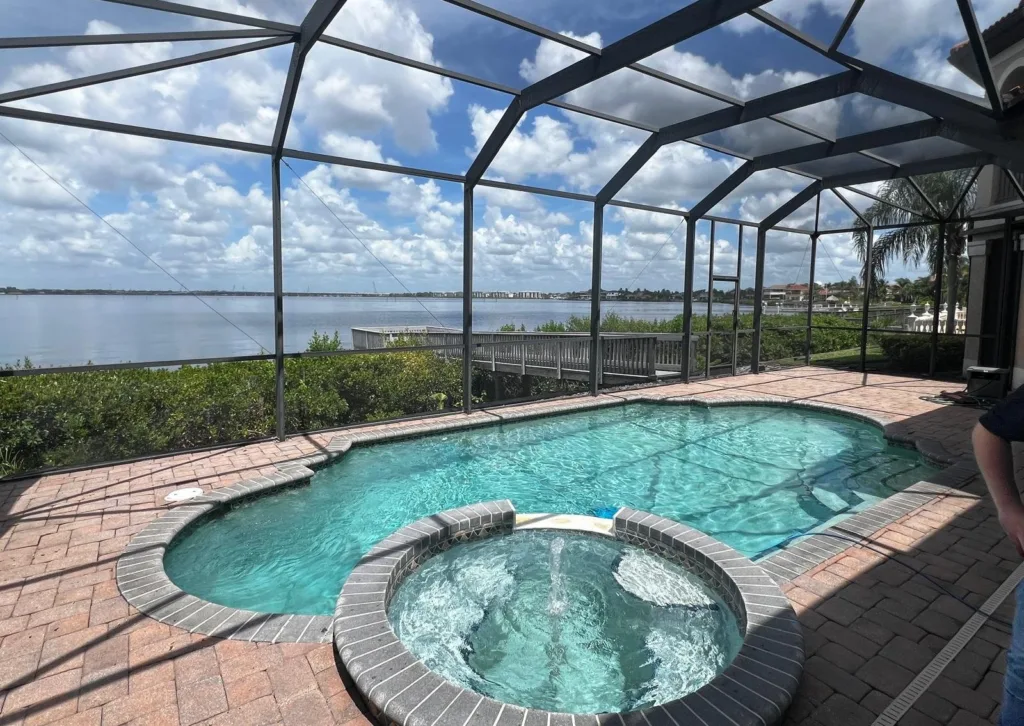
Tampa’s pool cages spend years under intense UV exposure, afternoon thunderstorms, and salt-laden air drifting in from the Bay. Aluminum frames chalk and fade, screws corrode, and screen mesh stretches or tears from summer storms. A cage that looked fine five years ago often shows pitting, rust streaks, or loose panels once you look closely, especially on homes built before stricter wind-load codes.
Pool cage restoration addresses the frame and the screen together: repairing bent or corroded aluminum, re-tensioning or replacing mesh, and applying a coating system suited to Florida’s heat and humidity. We have worked on cages across Tampa, from older enclosures near Seminole Heights to newer construction in Riverview and Apollo Beach, and we scope each project with a free written estimate before any work begins.
Tampa Weather and Salt Air Wear
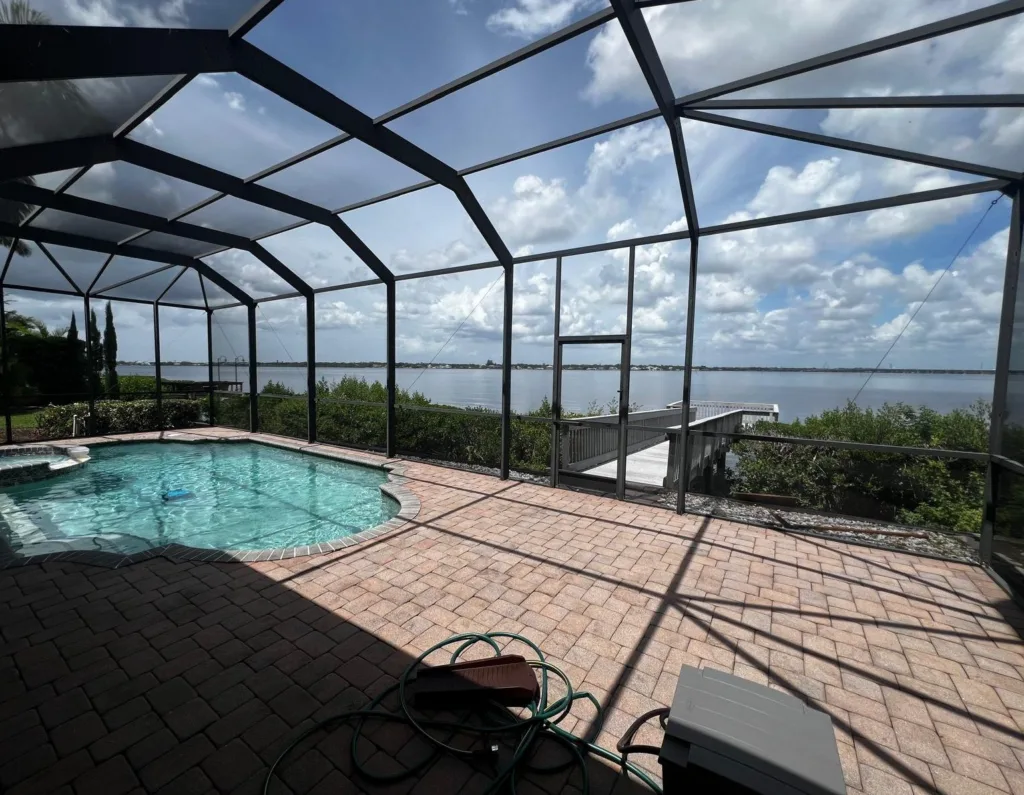
Homes closer to the water, in South Tampa, Apollo Beach, and along the Bayshore corridor, see faster corrosion because salt particles settle on aluminum framing and screen spline, working into joints that regular rain does not fully rinse away. Inland communities like Brandon and Valrico face less salt exposure but still take the full force of summer UV and afternoon storms.
Hillsborough County’s humidity keeps surfaces damp longer after rain, which gives mildew and white rust (aluminum oxide) more time to form on fasteners and panel seams. Combined with intense sun that breaks down screen mesh fibers and fades powder coating, the result is a cage that ages unevenly, sound in some sections and visibly deteriorated in others.
Cages built before Florida’s wind-load code updates often used lighter framing and fewer fasteners per panel, so they show stress sooner. We have worked on cages across Tampa, from older enclosures in established neighborhoods to newer builds near Riverview and Lithia, and the wear patterns consistently trace back to sun exposure, moisture retention, and age of the original screws and hardware.
Our Restoration Process, Start to Finish
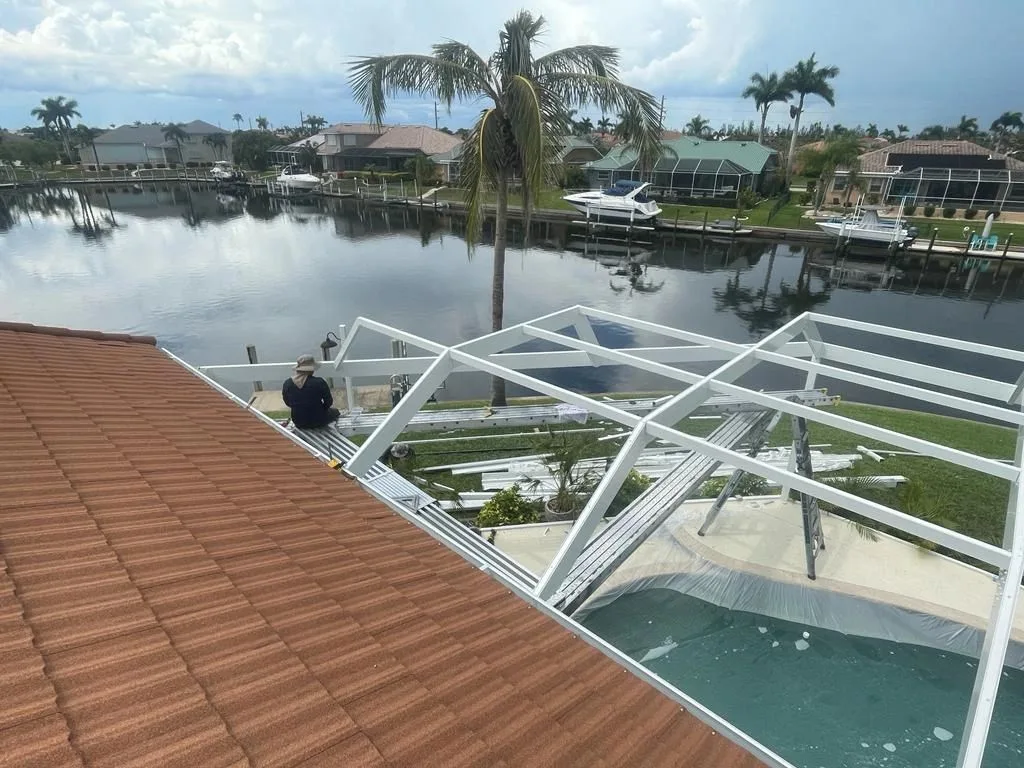
Every restoration starts with a walk-through inspection of the frame, fasteners, screen tension, and any panels showing rust bleed or separation at the corners. We check for soft spots in the aluminum, corroded screws, and areas where panels no longer sit flush, which tells us whether a section needs reframing or can be treated and repainted.
Pressure washing comes next, using controlled pressure to strip oxidation, mildew, and chalking residue without warping screen or loosening fasteners that are still sound. Rust spots get treated and primed before any coating goes on, since painting over active corrosion only hides the problem temporarily. Fasteners showing significant pitting are replaced at this stage.
Torn or stretched screen panels are rescreened to match the surrounding mesh, then the frame receives its coating in even passes suited for exterior aluminum exposed to Florida sun. Timelines generally run a few days to about two weeks depending on cage size and extent of rust, with coordination for HOA approval in communities that require exterior color review before work begins.
- Inspection of frame, fasteners, and screen condition
- Pressure washing to remove oxidation and mildew
- Rust treatment and primer on affected sections
- Screen replacement where mesh is torn or stretched
- Coating application matched to the existing or approved color
Timeline, Access and HOA Approval
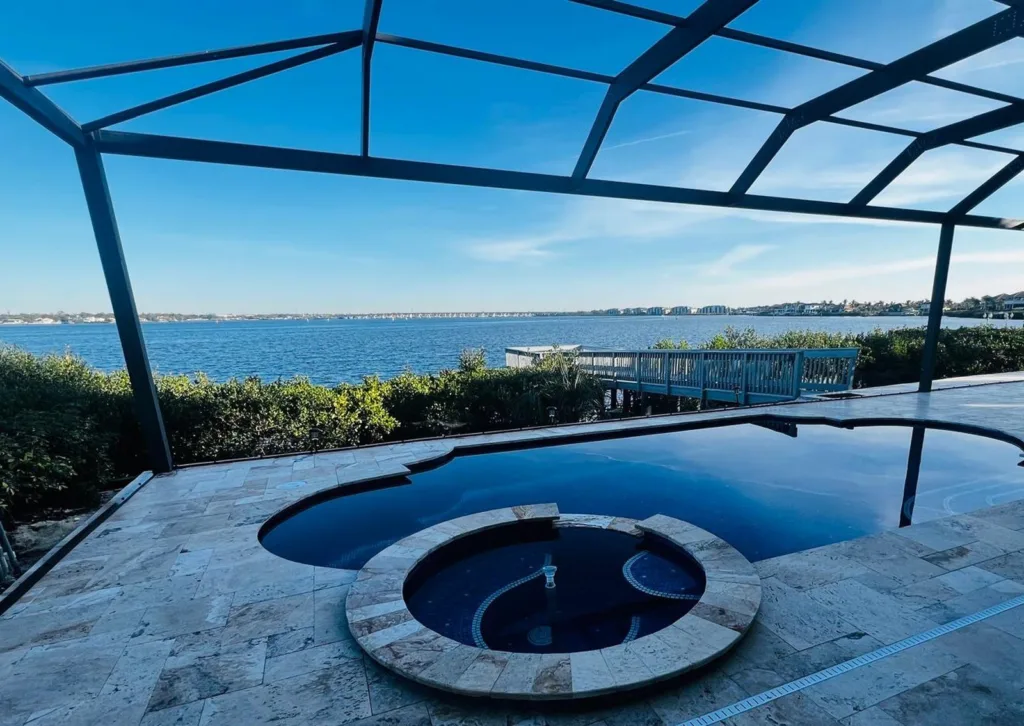
Most pool cage restorations in Tampa take a few days to about two weeks, depending on the size of the enclosure, the number of repairs needed, and weather. Summer afternoon storms are routine across Hillsborough County from June through September, and painting or rescreening work pauses when rain or high humidity prevents proper curing, so schedules build in flexibility rather than a fixed end date.
Pool and yard access is usually limited to the enclosure itself, so homeowners can generally keep using the rest of the yard. We section off work areas and keep gates functional at the end of each day, which matters for households with pets or kids who use the pool regularly.
Many Tampa neighborhoods, from gated communities in Lutz and Valrico to HOA-governed subdivisions in Riverview and Brandon, require approval before exterior changes like repainting a cage a new color. We can provide spec sheets, color samples, or product information needed for an architectural review request, and we recommend starting that process early since some HOAs meet only monthly.
Why Skipping Repair Steps Backfires
Painting over rust or corroded fasteners is one of the most common shortcuts we see on cages that come to us for a second restoration. Paint does not stop corrosion underneath it; it only hides it temporarily. Within a season or two, rust bleeds back through the new finish, and the metal underneath keeps weakening while the homeowner assumes the problem is solved.
Loose or corroded screws, especially at the baseplates and panel joints, are another issue that gets ignored because they are not visually obvious. An enclosure with compromised fasteners can shift slightly in wind, which stresses screen panels and accelerates tearing, even if the paint job looks fine.
Proper prep, sanding to bare metal where corrosion exists, replacing fasteners rather than painting around them, and checking screen tension before any coating goes on, is what determines whether a restoration holds up through Tampa’s humidity and storm season or needs to be redone in a year or two.
Process and Timeline
- Schedule a free written estimate and on-site inspection of the frame, fasteners, and screens.
- Review HOA or deed-restriction requirements and submit any paperwork needed for approval.
- Prep the cage by sanding corroded areas to bare metal and replacing damaged or loose fasteners.
- Apply primer and finish coatings suited for Florida’s UV exposure and humidity.
- Rescreen panels as needed and check tension across the full enclosure.
- Final walk-through with the homeowner to confirm the work matches the agreed scope.
Most restorations in the Tampa area are completed within a few days to about two weeks, depending on size and weather conditions.
Tampa Pool Cage Restoration FAQ
How do I know if my pool cage needs restoration instead of just rescreening?
If the screens are torn but the aluminum frame is straight, chalky, or faded rather than bent or corroded through, rescreening alone may be enough. Restoration is the right call when you see peeling paint, white oxidation powder on the metal, loose fasteners, or panels that have started to pull away from the frame, since those point to problems beyond the screen itself. A written estimate after an on-site look is the most reliable way to tell which one your cage needs.
Can you match the paint color of my existing aluminum frame?
Yes, in most cases. We can match the current color or help you choose a new one if you are ready for a change, which some homeowners decide to do when the original color has faded unevenly from years of Florida sun.
Will restoration work stop me from using my pool during the project?
You can generally still use the pool while the crew is working, though there will be a few days when screens are off or paint is curing and we will ask you to keep the area clear. We work section by section so the pool is never fully enclosed by open scaffolding or drop cloths for long.
Do I need HOA approval before restoring a pool cage in my Tampa neighborhood?
Many Tampa communities, including deed-restricted subdivisions in areas like Riverview, Valrico, and parts of New Tampa, require approval for exterior changes such as a new frame color. We can provide spec sheets or color samples to include with your HOA application, but checking your community's architectural review requirements before work begins is your responsibility.
How long does a typical pool cage restoration take?
Most residential restorations take two to five days, depending on the size of the cage, how much rescreening is needed, and whether the frame requires extra rust treatment before painting. Larger enclosures or ones with heavy corrosion can take longer, and we give a time range specific to your cage as part of the estimate.
What causes rust spots on aluminum cages that are not near the coastline?
Aluminum itself does not rust, but the steel fasteners, screws, and some connector hardware used in cage construction do, and once that rust starts it bleeds onto the surrounding aluminum. Inland Tampa neighborhoods still see this because of high humidity, sprinkler overspray hitting the base of the frame, and pollen or organic debris that holds moisture against the metal.
Nearby Areas We Also Serve
Our crews also take on pool cage restoration projects in the communities that surround Tampa, from fast-growing suburbs to older established neighborhoods nearby. St. Petersburg and Lakeland.
Statewide details, colors and the full process are on our main pool cage restoration page.
Recent Work
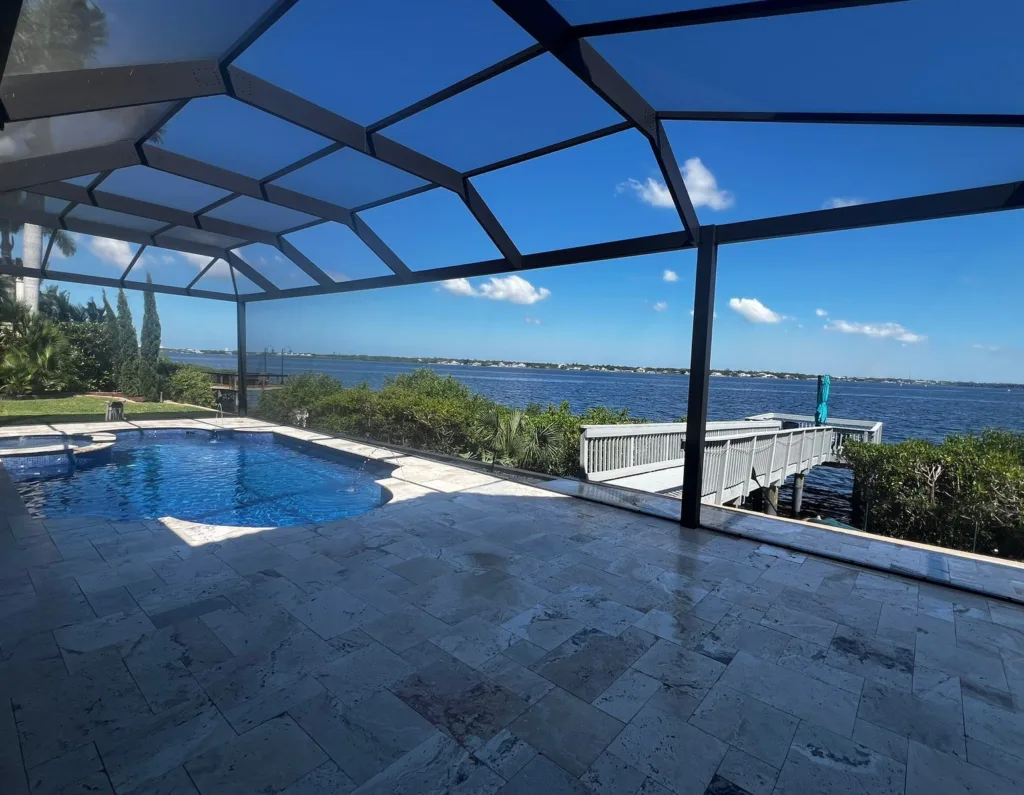
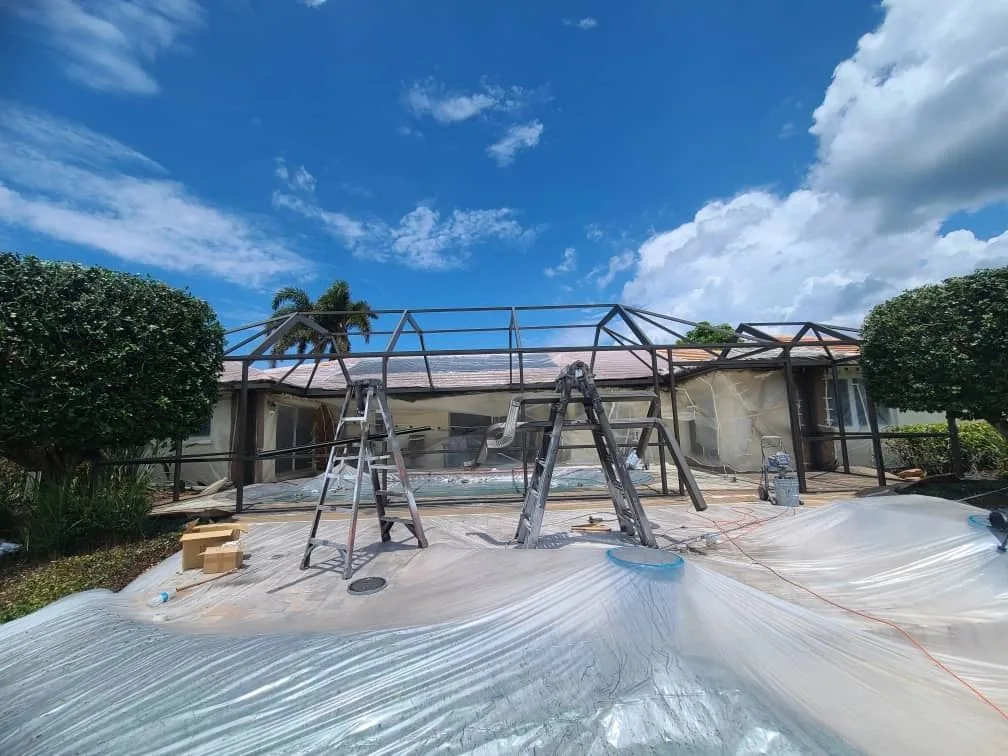
Request a Tampa Estimate
Send a few photos of your pool cage along with its Tampa address through the form, or call (877) 851-8727, and we will follow up with a written estimate that outlines the scope and timeline. There is no cost or obligation to request one.
Last reviewed: October 30, 2026